Voces daba un Marinero

15/11/2026, 17:00

Temple du Change, Lyon, France

Free admission
A sea voyage within the genre of the romance, navigating between early Castilian sources, Spanish and Judeospanish traditional romances from the Mediterranean.

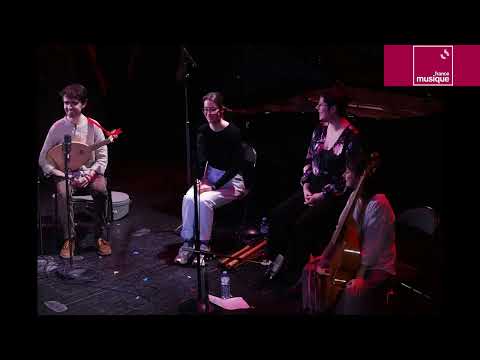
(Ôlyrix, Soline Heurtebise, 23/07/2023 - translated from French)
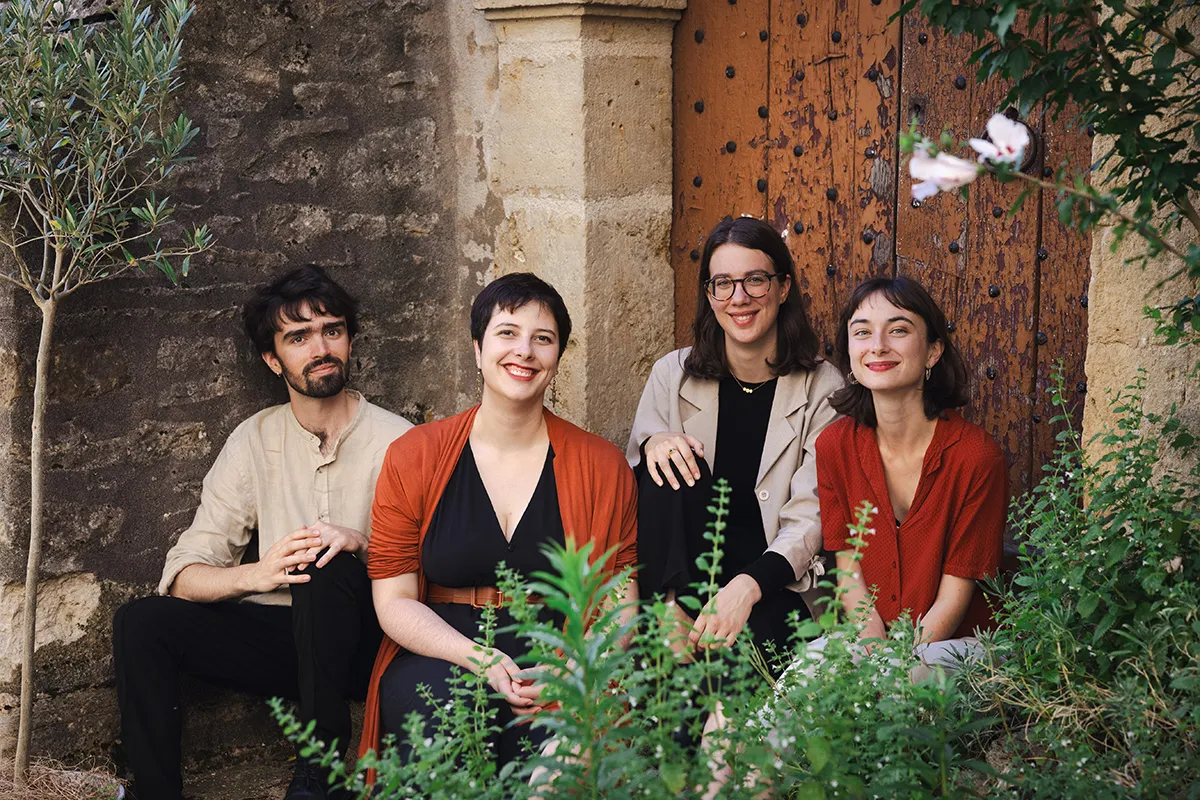
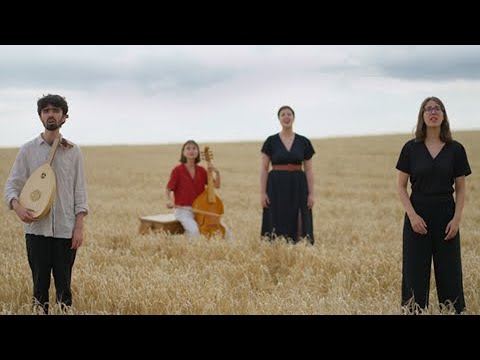
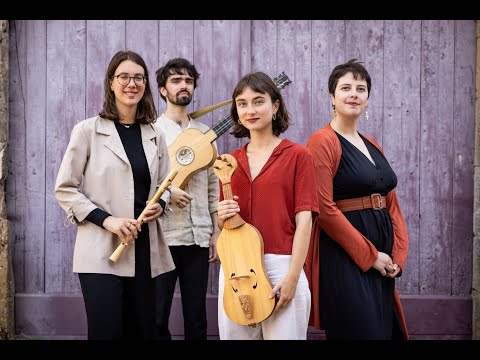
Matica de Flor was founded in 2022 by four musicians with a common passion for musical traditions of the Mediterranean. Initially formed at the CNSMD in Lyon, France, the ensemble is now performing regular concerts in its home country and abroad.
Matica de Flor aims to bring to its public early and traditional repertoires of the Mediterranean, subtly put into perspective by a thoroughly personal and creative approach. This original and unique project challenges genre boundaries and offers a lively and informed dialogue between oral and written sources, improvisation, and arrangements of early and traditional pieces. Through the layering of various historical eras, places and cultures intertwine, responding to and nourishing each other.
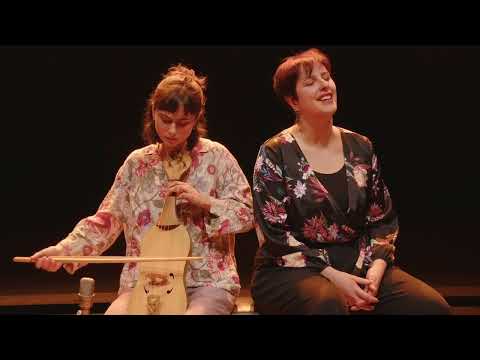
Ariane Le Fournis’s mezzo-soprano voice echoes the sounds of early and traditional instruments including lutes and guitars, the viola da gamba, the vielle, oriental percussion, recorders, bansuri, and other early and traditional wind instruments. Each instrumentalist also sings, the four musicians thus creating a rich and subtle palette of ever-changing and constantly renewed sounds.
Matica de Flor received support from the Cité de la Voix (Vézelay) as part of its Young Ensembles program in 2024. The project was also selected for the European Early Music Network’s “REMArkable” young artists' 2025 program and received grants by the Société Générale Foundation in 2024 and Nguyen Thien Dao in 2025. The ensemble is also the proud winner of the CSBF Next Gen European competition in 2025.
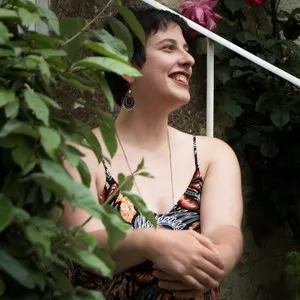
Voice and oriental percussion
Ariane Le Fournis, a French mezzo-soprano with a rich and full voice, has recently earned a master’s degree in early music vocal performance from the CNSMD in Lyon.
She enjoys ensemble performance, which is why she is involved in numerous choirs and polyphonic ensembles, ranging from symphonic to early music (Le Chœur de Versailles last season, Sollazzo, Musica Vera, Spirito, Le Concert Spirituel, Vox Luminis, Correspondances, G. Binchois, Radio France, Les Cris de Paris, Irini...)
She also sings in young ensembles formed with colleagues such as Matica de Flor, or L’Orangier, a quintet specializing in French Baroque music.
She discovered music in the Sarthe region, at the CRD in Le Mans, initially as an instrumentalist (flute, harpsichord). Passionate about humanities, she continued her studies in preparatory classes at the Lycée Fénelon (Paris). After completing her hypokhâgne and khâgne years, she resumed her vocal studies in various conservatories: the CRD in Gennevilliers and the CRD in Bobigny. During this time, she explored Eastern and Mediterranean vocal styles in Rachid Brahim-Djelloul’s class.
While pursuing her studies at the conservatory, she earned a bachelor’s degree in musicology (Sorbonne University) and a Master’s degree in Modern Literature Education (MEEF) in 2020 (Sorbonne Nouvelle). That same year, she enrolled at the CNSMD in Lyon to study early music singing under the guidance of Robert Expert (Baroque singing), Anne Delafosse (medieval and Renaissance singing), and Anne-Catherine Vinay (vocal coach and harpsichordist).
Ariane Le Fournis has had the opportunity to participate in courses and masterclasses with numerous vocal specialists (Paul Agnew, Marc Mauillon, Stéphane Degout and Sandrine Piau, Peter Kooij, Sébastien Daucé, Lucile Richardot, Louis-Noël Bestion de Camboulas, Vincent Dumestre, Benjamin Lazare).
She participates in various musical productions and regularly performs solo alto parts: the title role in Glück’s Orphée (November 2024), the Third Child and Third Lady in The Magic Flute, Alto in Bertali’s opera La Magia Delusa at the Roya Early Music Festival, solo alto in Haydn’s Missa in tempore Belli in 2023 with Stéphanie-Marie Degand, and J-M Haydn’s Requiem in C with Vox Luminis at Bozar in Brussels in 2023. Last year, she sang in the choir of David and Jonathas with Correspondances. In March 2025, she performed the alto-soprano solo part in Charpentier’s Te Deum at the Royal Chapel of Versailles and at the Salle Gaveau.
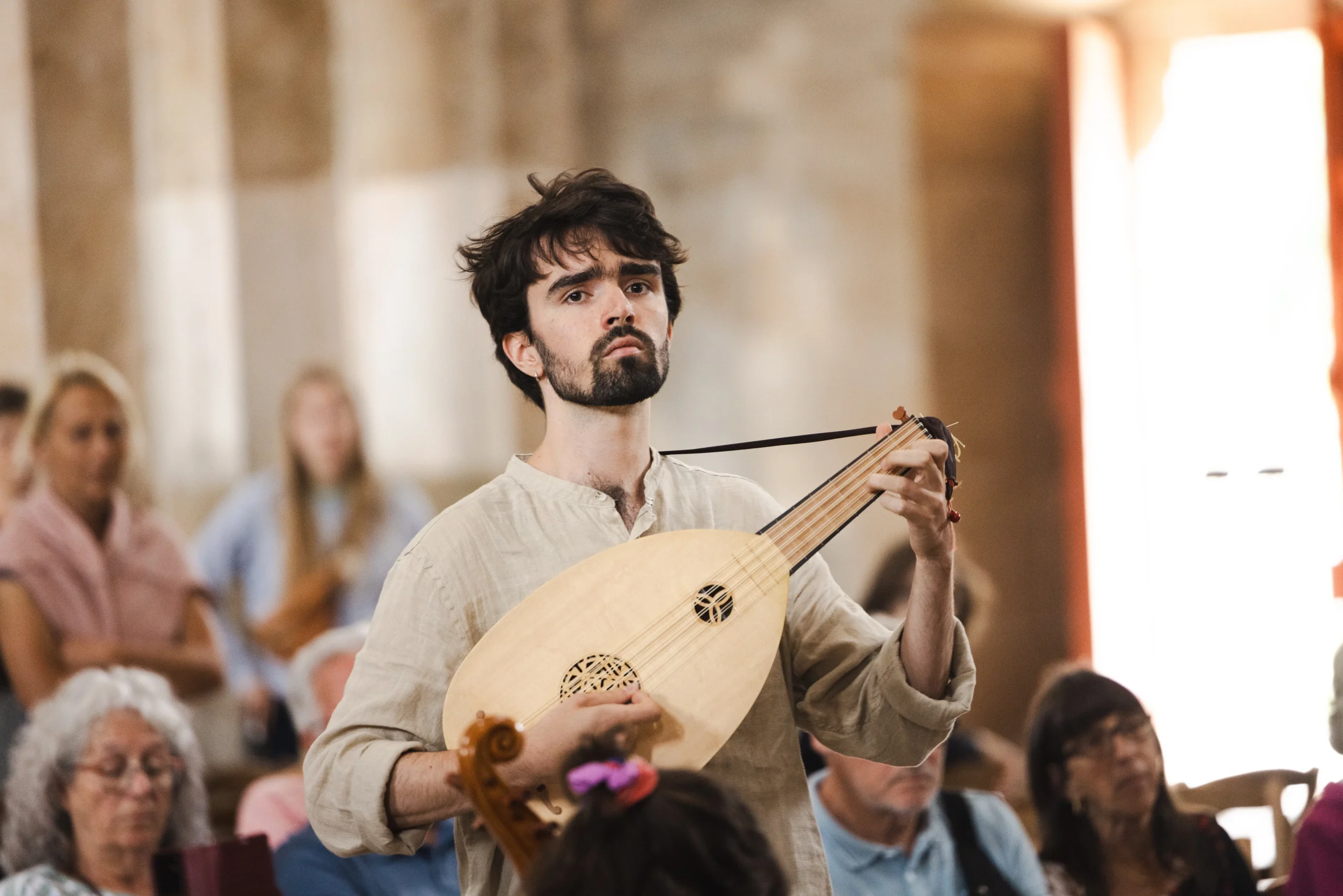
Plucked strings and voice
Martin Billé performs on a variety of Baroque, Renaissance, and medieval plucked string instruments, including lutes, guitars, the theorbo, and the archlute. He performs both as a soloist and with ensembles, including Correspondances (Sébastien Daucé), Les Musiciens de Saint Julien (François Lazarevitch), Doulce Mémoire (Denis Raisin-Dadre), Capella Sanctae Crucis (Tiago Simas Freire), Alkymia (Mariana Delgadillo Espinoza), Astrum, Il Buranello (Stéphanie Révillion), Le Concert Idéal (Marianne Piketty), Seconda Pratica, La Capriola (Dorine Lepeltier-Kovács), Matica de Flor, L’Orangier (Zuzanna Dubiszewska), Le Grand Ballet (Matthieu Franchin), the Ensemble Transatlantique (José Miguel Huamaní), as well as in interdisciplinary projects with Harmonia Sacra’s Opérabus (Yannick Lemaire), and research projects.
After studying with Jean-François Deruy and Pascale Boquet, he earned a master’s degree in early plucked strings in Rolf Lislevand’s class at the CNSMD in Lyon, having notably received instruction from renowned soloists during masterclasses, including Hopkinson Smith, Benjamin Perrot, and Eugène Ferré. He also holds a State Teaching Diploma (Diplôme d'Etat).
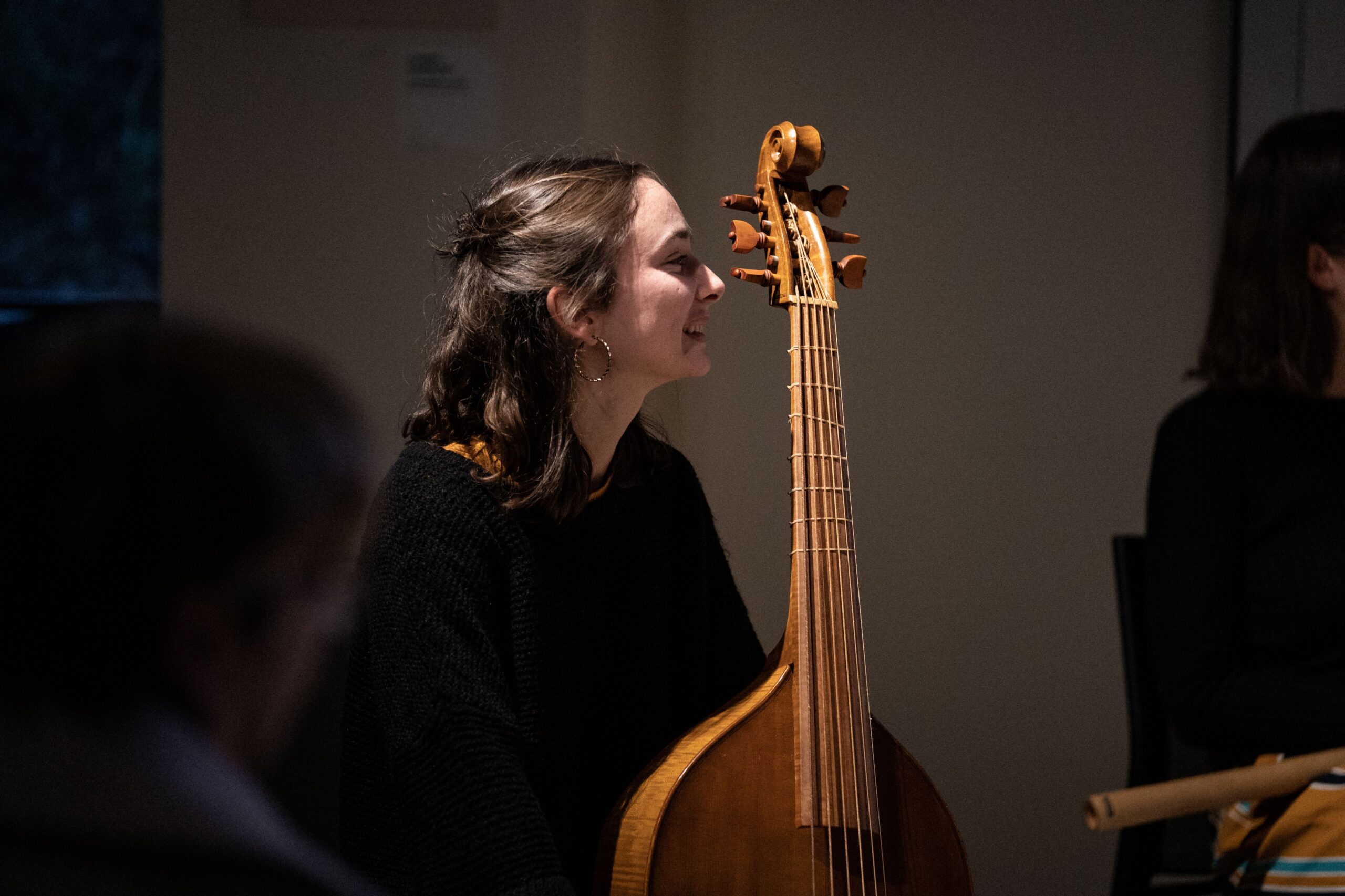
Viola da gamba and vielle
Juliette Guichard' first encounter with the viola da gamba occured when she was 7 years old. Intrigued by its unique sound and the diverse repertoire dedicated to it, she decided, after 10 years of study at the CRR in Angers with Eleanor Lewis-Cloué, to make it her constant companion. She then studied at the CNSMD Lyon from 2020 to 2025 with Myriam Rignol and Marianne Müller and spent six months on an Erasmus exchange at the Schola Cantorum Basiliensis with Paolo Pandolfo in 2024.
She has also received instruction from renowned artists during international workshops and masterclasses, notably from Lucile Boulanger, Joshua Ceatham, and Guido Balestracci.
She currently performs with various ensembles in France and Europe on the viola da gamba and medieval vielle, such as La Chapelle Harmonique (V. Tournet), Agamemnon (F. Cardey), Les Lunaisiens (A. Marzorati), Concerto Soave (J-M. Aymes), Ars Figuralis (C. Escoffier), Matica de Flor (which she co-founded), The Poeticall Consort, and Ecco la primavera, at numerous festivals and concert venues (Saintes, La Cité de la Voix, Utrecht, Saorge, Granville, Les Méridiennes...). She holds a state teaching diploma (DE), and teaches at the Bourgoin-Jallieu Conservatory, where she launched the viola da gamba class in September 2024. An enthusiastic musician, she develops a multifaceted and colorful style of playing where timbres and styles converge.
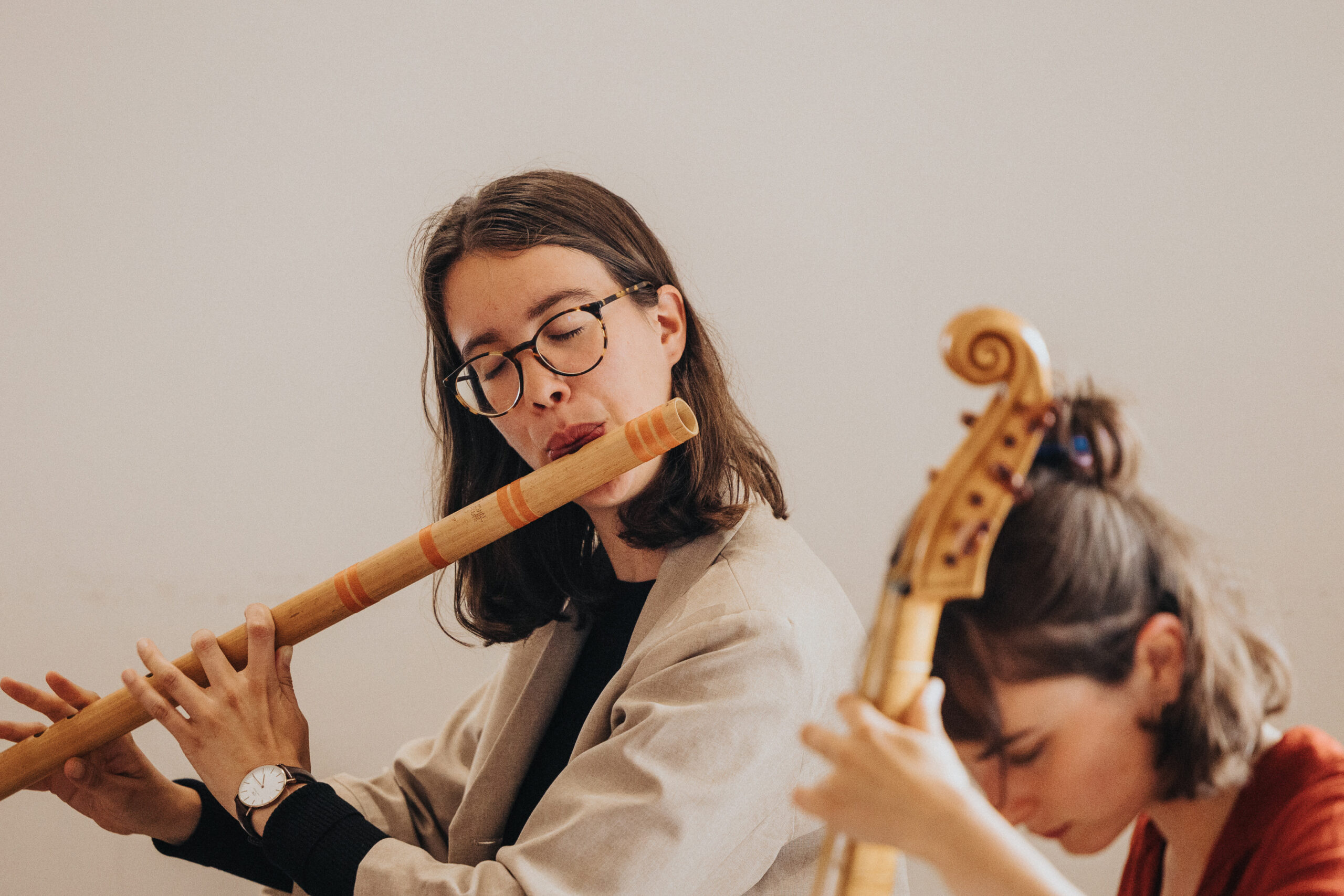
Recorders, bansuri, wind instruments
Recorder player, baroque bassoonist and multi-instrumentalist, Emma Crumpton sees herself as an explorer of musical repertoires. She enjoys experimenting and seeking connections between musical languages and styles, ranging from early music in which she specializes, to Latin American, Mediterranean, and Hindustani music—which she is passionate about—as well as other repertoires she encounters throughout various projects and collaborations.
Having graduated in 2025 with a Master’s degree in recorders from the CNSMD in Lyon in Tiago Simas Freire’s class, she previously studied with Pierre Hamon and Pierre Boragno. She is training in baroque bassoon and dulcian with Jérémie Papasergio, as well as in Hindustani bansuri flute with Chloé Loneiriant.
She performs regularly with ensembles such as Matica de Flor, le Consort de Passage (recorder consort), l'Ensemble Transatlantique (early Latin American music), La Nébuleuse (French Baroque), and Salamandræ (French Baroque). She also participates in original and innovative projects such as “Chloé Loneiriant et les Fleurs d'Ici” (Indian music “reimagined” on bansuri flutes and recorders, premiered at the CIMM in 2025), or “Towards an Anthology of Portuguese Renaissance Music” (supported by Creative Europe in 2024).
In 2025, she was selected to join the “REMArkable” program of the European Early Music Network.
She obtained a Teaching Diploma (DE) in early music in 2024, and her strong desire to share music leeds her to teach at the Achères Conservatory (Paris region).
15/11/2026, 17:00
Temple du Change, Lyon, France
Free admission
A sea voyage within the genre of the romance, navigating between early Castilian sources, Spanish and Judeospanish traditional romances from the Mediterranean.
29/11/2026
SoundBoxFest, Palais du Coudenberg, Bruxelles

Alta es la Luna
A journey of melodies that puts into perspective traditional Sephardic tunes and Spanish pieces form the Renaissance cancioneros.
05/09/2027
Abbaye de Marbach (France)
Alta es la Luna
A journey of melodies that puts into perspective traditional Sephardic tunes and Spanish pieces form the Renaissance cancioneros.
x
A journey of melodies that puts into perspective traditional Sephardic tunes and Spanish pieces form the Renaissance cancioneros.
Sephardic culture has its roots in pre-1492 Spain. Kept alive over the centuries throughout the Mediterranean basin, its music is the fruit of constant dialogues and influences. 15th-century Spain, distant yet very much present in the collective Sephardic imagination, will resonate throughout this poetic and vibrant programme.
By exploring in particular the world of night and the richness of love songs, we offer a colourful journey through lively songs, lullabies and romances, punctuated by texts ranging from various poems to excerpts from 20th-century diaries: a constant dialogue between past and present.
This programme was built, nurtured and presented throughout 2024, and has been performed regularly ever since. It is notably the fruit of the work carried out during our residencies in La Roche-sur-Yon (February 2024) and Vézelay (July 2024).
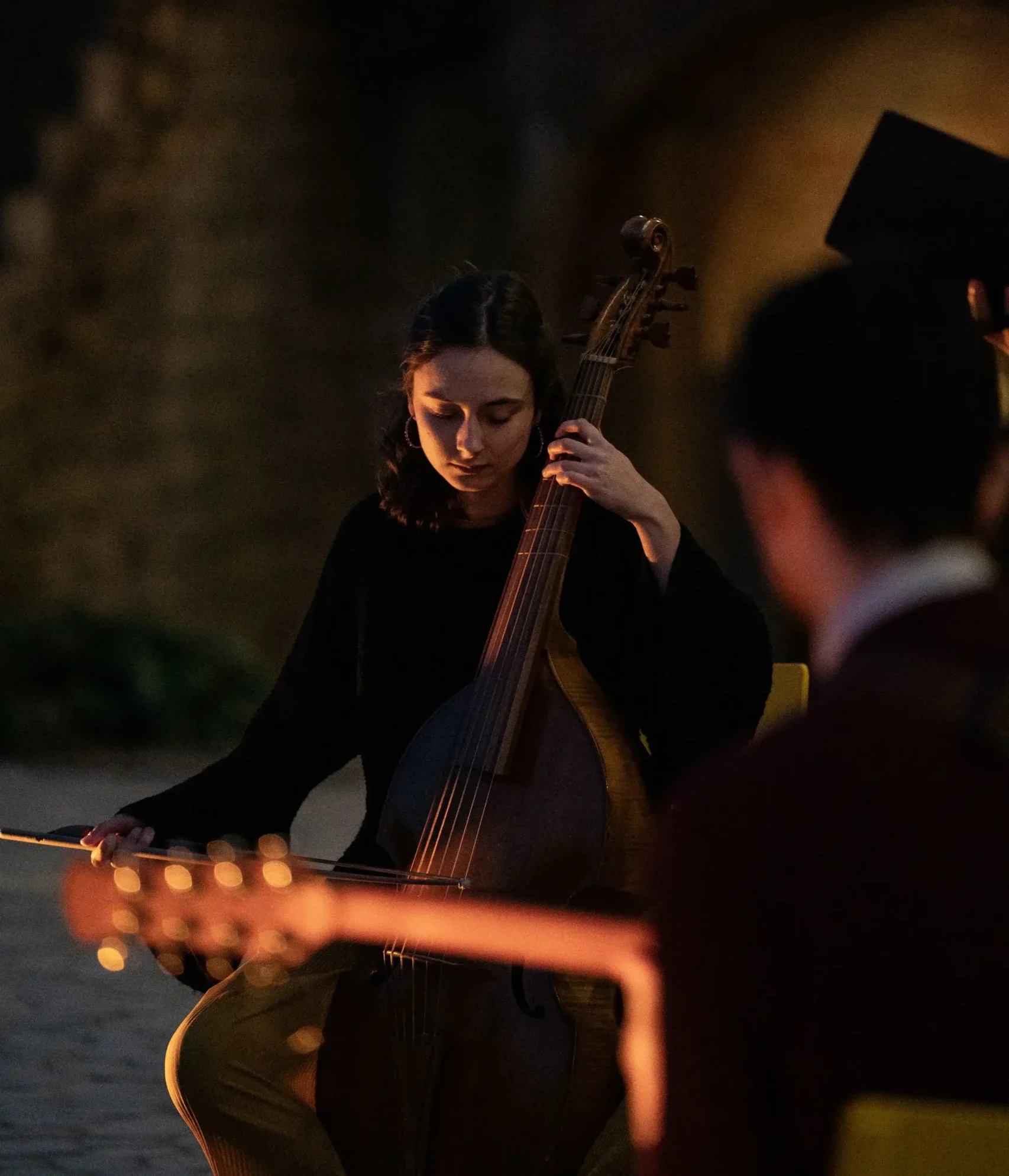
A sea voyage within the genre of the romance, navigating between early Castilian sources, Spanish and Judeospanish traditional romances from the Mediterranean.
The romance is a poetic and musical genre originating in the Iberian Peninsula, which has evolved both in its region of origin and in the Sephardic communities that emerged from it.
These communities, which formed throughout the Mediterranean following their expulsion from the Iberian Peninsula in 1492, preserved this genre as well as, at times, texts derived from medieval Castilian and enriched it with various stylistic influences (Turkish, Moroccan, Greek, etc.). Meanwhile, in Spain, the genre survived and continued to evolve according to the aesthetic standards of the various eras it lived through.
Romances recount great epics, love stories inherited from courtly love, historical events - invented or real... The richness of this genre is reflected in this concert program, in the themes explored, the linguistic subtleties (spanning medieval Castilian, Judeo-Spanish, and modern Spanish), and in the connections between eras, locations and stories.
In our "romancero", a collection of romances carefully selected by us, the diverse voices of people connected by a unique sea echo one another across its waters.

Quotidiennes 2024
Bourse allouée aux projets d'étudiants du CNSMDL